
Ankle and foot ultrasound in Pozzallo
Ankle and foot ultrasound performed personally by the radiologist, by appointment, at the practice in Pozzallo (RG), Italy. Report and explanation at the end of the scan.
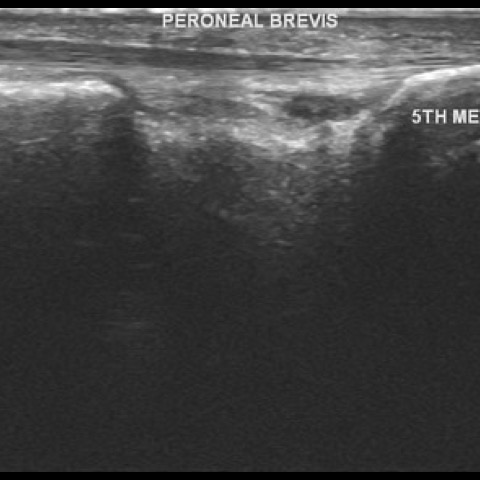
What it is for
Assesses the peri-malleolar ligaments, the Achilles tendon, the plantar fascia and the bursae of the foot. Requested after an ankle sprain, suspected ligament injury, Achilles tendinopathy or plantar pain.
Why it is done
Useful after an ankle sprain, heel or sole pain, or suspected ligament injury.
How it works
Foot and ankle with gel; sometimes small movements of the foot.
What I check
We assess the ankle ligaments, the Achilles tendon, the plantar fascia and the bursae of the foot.
Is any preparation needed?
No. This scan needs no fasting and no preparation. If you have previous reports or scans, bring them with you: they help to compare and follow any change over time.
How much it costs
A single fee of €80 for every exam: includes the scan, the written report handed to you straight away and a spoken explanation. See fees
Frequently asked questions
Is it useful for heel pain?
Yes, it is the first-choice exam. In plantar fasciitis I measure the thickness of the fascia where it attaches to the heel bone and compare it with the healthy side: it is an objective measurement, also useful for following the response to treatment at later checks.
Is it useful after an ankle sprain?
Very. I study the outer ligaments, in particular the anterior talofibular ligament, which is the one most often injured, any effusion and the state of the peroneal tendons. If needed, I also assess the Achilles tendon.
Can a Morton's neuroma be seen?
Yes. It is looked for between the heads of the metatarsals, where it causes that burning pain radiating to the toes. Ultrasound detects it and measures its size, and it is well suited to the task because pressure can be applied at the exact spot where it hurts.
Can ultrasound see fractures?
Ultrasound shows tendons, muscles, ligaments and the surface of the bone well, but not the inside of the bone. If a fracture is suspected, the first exam is usually an X-ray.
Why is the side that does not hurt sometimes checked too?
Because comparing with the healthy side helps to tell whether a difference is significant. If needed I do it during the same appointment, at no extra cost.
Does it hurt?
No, ultrasound does not hurt. It is a painless exam: the probe glides over the skin with a little gel. In some cases the pressure of the probe may cause slight discomfort, for example on an area that is already inflamed, on a very full bladder or on a painful joint. In rare situations, such as appendicitis, the scan may be more uncomfortable, but these cases are rare and the pressure is adapted to what you can tolerate. If you feel pain, tell me: we stop straight away.
How long does an ankle and foot ultrasound take?
About 15–20 minutes; up to 30 if both the ankle and the foot need to be examined, for example ligaments and heel.
What should I wear? Should I avoid creams?
Avoid creams on the ankle and foot on the day of the scan. Remove socks and ankle supports; wear trousers that roll up easily above the ankle.
Related scans
See all the ultrasound scans available or read about the practice and contact details.
This information describes the scan in general terms and does not replace your doctor’s advice. To find out which exam suits your case, ask your doctor or contact me.
Would you like to book this scan?
Online in a few steps, or by phone. By appointment in Pozzallo (RG), Italy.
Book online