
Kidney ultrasound in Pozzallo
Kidney ultrasound performed personally by the radiologist, by appointment, at the practice in Pozzallo (RG), Italy. Report and explanation at the end of the scan.
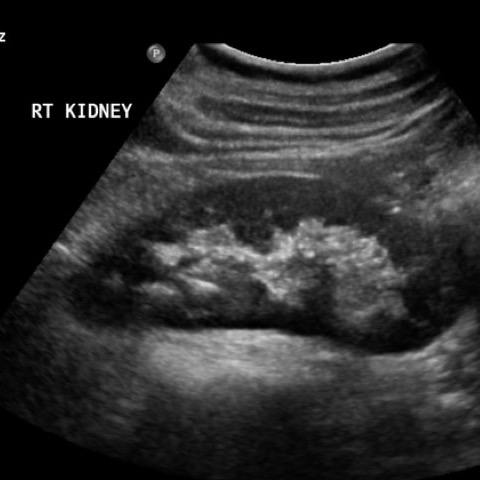
What it is for
Studies the kidneys, renal pelvis and proximal ureters. Indicated for flank pain, renal colic, blood in the urine, monitoring of kidney stones or kidney follow-up when a full urinary tract study with the bladder is not needed.
Why it is done
Your doctor requests it for flank or back pain, suspected renal colic, blood in the urine, or to follow up a kidney already monitored, for example because of a cyst or a stone that is already known. This scan, focused only on the kidneys, is chosen when there is no need to also check the bladder or blood flow.
How it works
You lie on the couch, first on your back and then on each side. I apply a little gel to your back and flank, where the kidneys are, and move the probe to see them from different angles. It is painless, like any ultrasound scan.
What I check
We check the size, shape and position of the kidneys, the thickness of the kidney tissue and the renal pelvis, the inner part where urine collects before flowing into the ureter. We also see the start of the ureters, but not the bladder. We look for stones, cysts or a kidney that is dilated because of an obstruction to urine flow.
Is any preparation needed?
Yes: fasting for 6-8 hours is recommended, because bowel gas, which increases after meals, can hide the kidneys. You may drink water and take your usual medication. A full bladder is not needed. Bring any previous scans with you.
How much it costs
A single fee of €80 for every exam: includes the scan, the written report handed to you straight away and a spoken explanation. See fees
Frequently asked questions
How does it differ from the urinary tract ultrasound?
Kidney ultrasound studies the kidneys, the renal pelvis (the cavity that collects urine inside the kidney) and the first part of the ureters. The urinary tract ultrasound also includes the bladder and the post-void residual measurement, which is why it needs a full bladder.
Can stones be seen?
Kidney stones usually can, although stones of just a few millimetres may be missed. Ureteral stones are rarely seen directly: the indirect sign is hydronephrosis, a dilation of the kidney’s collecting system above the blockage. The report states the limits of the scan.
What is the difference from the renal artery Doppler ultrasound?
They are two different exams. A kidney ultrasound looks at the shape and structure of the kidneys. The renal artery Doppler ultrasound instead looks at how blood flows in the arteries that supply the kidneys: it is mainly used for high blood pressure that is hard to control.
Do I need to fast? Do I need a full bladder?
Yes, fasting for 6–8 hours is recommended: bowel gas, which increases after meals, can hide the kidneys and make them harder to assess. You may drink water and take your usual medication. A full bladder is not needed, because the bladder is not part of this scan.
Should I worry if a cyst is seen in the kidney?
Simple kidney cysts are a common finding and in the vast majority of cases benign. The ultrasound describes their appearance; the report states whether follow-up checks or other tests are needed.
Does the ultrasound replace blood and urine tests?
No. Ultrasound shows the shape and size of the organs; blood and urine tests describe how they work. They are complementary and doctors often request them together.
Does it hurt?
No, ultrasound does not hurt. It is a painless exam: the probe glides over the skin with a little gel. In some cases the pressure of the probe may cause slight discomfort, for example on an area that is already inflamed, on a very full bladder or on a painful joint. In rare situations, such as appendicitis, the scan may be more uncomfortable, but these cases are rare and the pressure is adapted to what you can tolerate. If you feel pain, tell me: we stop straight away.
How long does a kidney ultrasound take?
About 15–20 minutes: both kidneys, the renal pelvis and the first part of the ureters are examined.
Should I avoid creams or wear anything in particular?
Avoid creams or oils on your abdomen on the day of the scan and wear comfortable clothes that let you uncover your abdomen easily.
Related scans
See all the ultrasound scans available or read about the practice and contact details.
This information describes the scan in general terms and does not replace your doctor’s advice. To find out which exam suits your case, ask your doctor or contact me.
Would you like to book this scan?
Online in a few steps, or by phone. By appointment in Pozzallo (RG), Italy.
Book online